
The Cross-Training That’s Missing in Your London 2026 Marathon Training: Reformer Pilates
A Doctor of Physical Therapy’s Opinion
Written by Grace Heinrichs, PT, DPT, MCSP
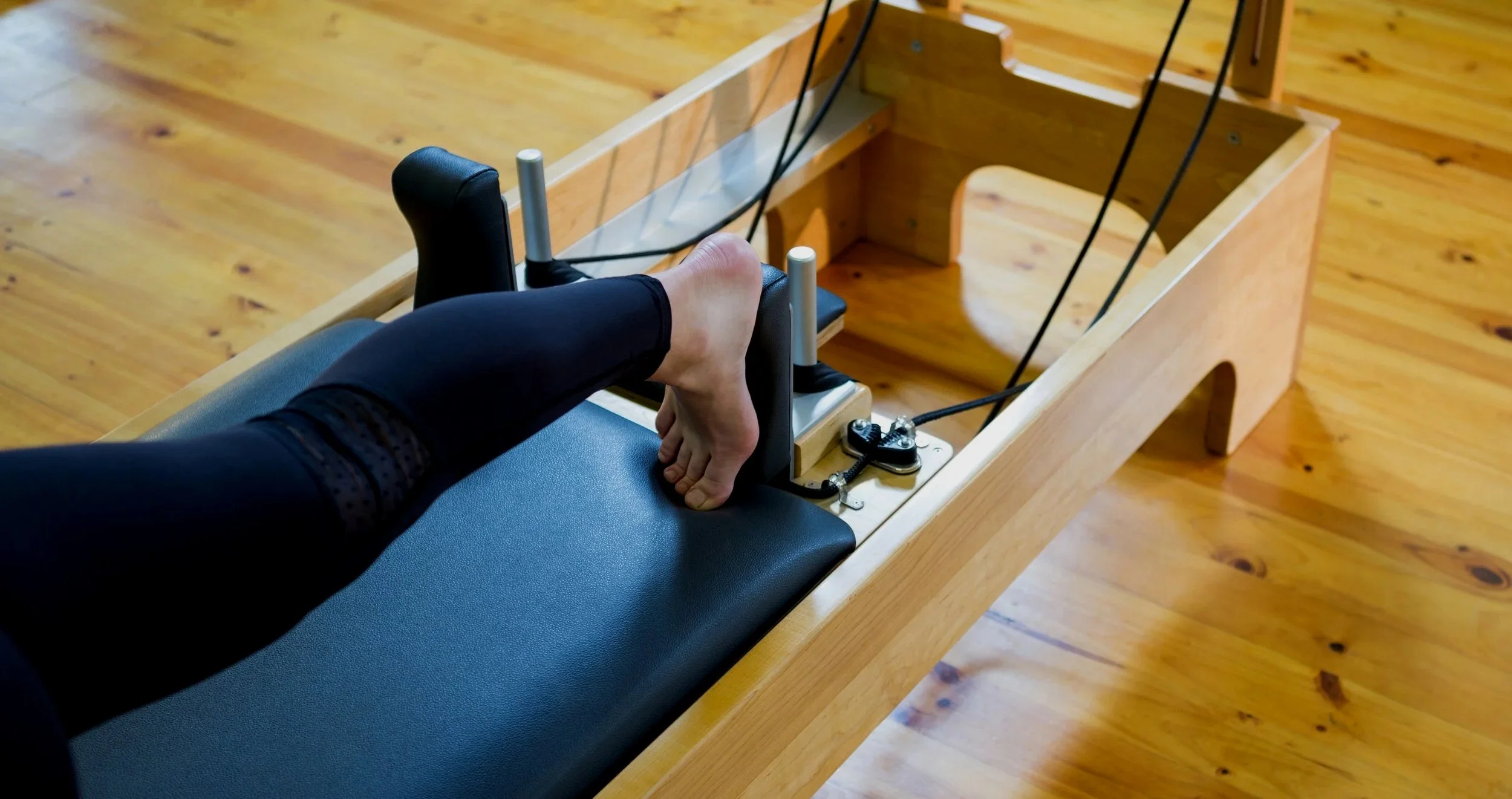
Training for a marathon, especially one as iconic as the London Marathon, is an incredible physical and mental challenge. High mileage, long runs, speed work, and race-day goals demand a lot from your body. As a Doctor of Physical Therapy and Reformer Pilates Instructor, I see firsthand how marathon runners succeed or turn out running into roadblocks. More often than not, this isn’t based on the actual running, it is how they prepare their bodies to handle running.
This is where Reformer Pilates comes in.
We need to move away from “pilates is just core work” and into “pilates future-proofs your body”. When applied skilfully, the reformer is one of the most effective pieces of equipment for injury prevention, rehabilitation, and performance enhancement for endurance athletes.
Let’s break down why.
The Injury Reality of Marathon Training:
Marathon runners are highly repetitive athletes. Every step places load through the feet, ankles, knees, hips, and spine thousands of times per run. Common issues I see in runners include:
Achilles tendinopathy
Plantar fasciitis
Medial tibial stress syndrome (MTSS)
IT band syndrome
Patellofemoral pain
Hip flexor and hamstring strains
Low back pain
Most of these injuries are not caused by running itself but by:
Poor load management
Weakness in stabilizing muscles
Limited joint mobility
Inefficient movement patterns
Reformer Pilates addresses all of these without adding more impact or mileage.
Why Reformer Pilates is Different from Traditional Strength Training
Unlike traditional gym-based strength training, the reformer provides variable resistance through springs, allowing us to train:
Strength through FULL ranges of motion
Control during BOTH eccentric and concentric loading
Stability under unstable and asymmetrical conditions
Enhanced neuromuscular coordination and motor control
Integrated breath control and diaphragmatic breathing strategies
Reformer pilates improves the central nervous system’s ability to recruit the right muscles at the right time for efficient, precise movement patterns. Breathwork on the reformer optimizes core stabilization, improves oxygen efficiency, and supports sustained postural endurance under load.
This is exactly how the body functions during running. As a Physiotherapist, I love that the reformer allows for precise loading so we can challenge tissues enough to stimulate adaptation, without overstressing joints or irritate structures.
Injury Prevention: Building a Body That Can Tolerate Mileage
One of the biggest predictors of injury is not weakness -> It's lack of control.
Reformer Pilates targets:
Deep core stabilizers (transversus abdominis, multifidus)
Hip stabilizers (glute medius, deep rotators)
Foot and ankle control (posterior tibialis, small intrinsics)
Pelvic stability during single-leg loading
Force transfer and shock absorption through jumpboard reformer
Marathon running is essentially a series of controlled single-leg hops. Pilates trains this exact demand.
By improving alignment, coordination, and muscular endurance, runners can:
Reduce compensatory movement patterns
Improve shock absorption
Maintain form deeper into long runs and race day
Injury Rehabilitation: Staying Strong While Healing
For runners coming back from injury, the reformer is one of the safest and most effective rehab tools available.
Because resistance is adjustable and often non-impact, we can:
Maintain cardiovascular and muscular conditioning
Gradually reload injured tissues
Restore symmetry and confidence
Transition smoothly back to running
Rather than “resting until the pain is gone”, reformer pilates allows runners to keep training intelligently, which leads to better long-term outcomes and fewer re-injuries.
Performance Enhancement: Running Stronger, Not Just Longer
At the marathon distance, efficiency matters more than raw strength
Reformer pilates improves:
Running economy
Pelvic and trunk stability
Hip extension power
Arm to leg coordination
Breathing mechanics
A stable core allows the legs to move freely. A strong posterior chain improves propulsion. Efficient breathing delays fatigue.
The result? Better pacing -> less wasted energy -> stronger finishes in the final miles
Why London Marathon Runners Especially Benefit:
The London Marathon is fast, flat, and crowded. That combination demands:
Postural endurance
Ability to maintain form under fatigue
Strong shock absopriton on pavement
Reformer Pilates prepares runners for sustained repetitive loading, long periods of upright posture, and the cumulative stress of race day without increasing impact.
How to Integrate Reformer Pilates Into Marathon Training:
For most runners:
1-2 sessions per week
Focus:
Single-leg work
Hip stability
Neuromuscular core stabilization
Spinal mobility
Controlled loading
Adjust intensity during peak mileage weeks
Instead of “extra work” think of reformer as protective training to optimize your marathon plan
As a Doctor of Physical Therapy, my clinical focus is on preparing the body to tolerate the cumulative demands of endurance training. I love to integrate the reformer with my patients because it allows for precise, graded loading, targeted neuromuscular control, and single-limb stability training that directly translates to running mechanics. This approach addresses movement efficiency and tissue capacity proactively, reducing injury risk while supporting long-term performance and durability.
Final Thoughts:
Marathon success revolves around preparation. Reformer Pilates bridges the gap between rehab and performance enhancement. For runners aiming to toe the line at the 2026 London Marathon healthy, confident, and strong, it’s one of the smartest cross-training investments you can make.
Train your body to support your running and it will carry you farther than mileage alone ever could.
Ready to experience the benefits for yourself?
Book a session at X-Club today and let our instructors guide you through breath-led, full-body movement designed to support recovery and wellness from the inside out.
👉 Book Your First Class - Notting Hill & Mayfair